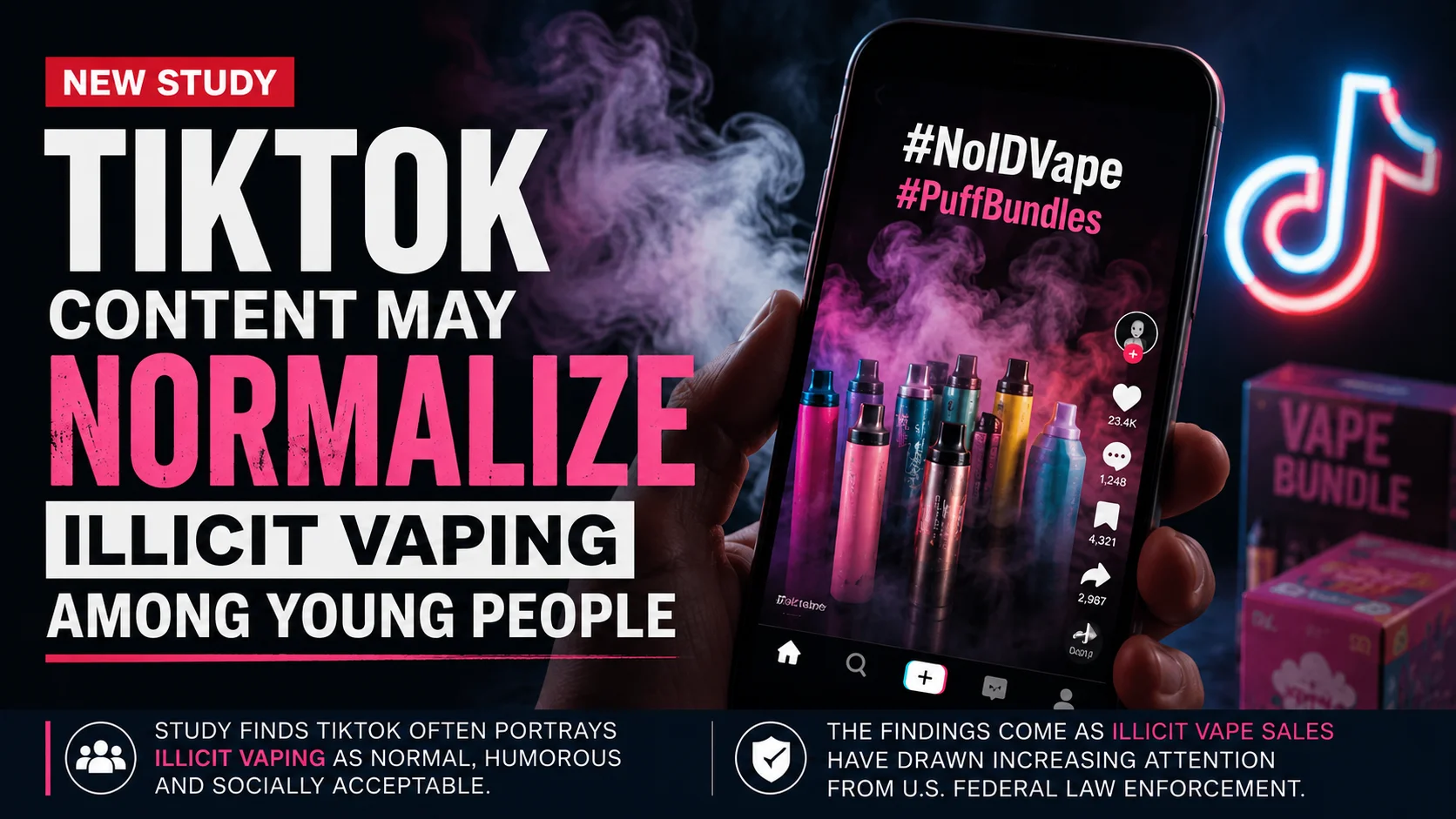

A new study published in the journal Addiction found that TikTok content often portrays illicit vaping as normal, humorous and socially acceptable, potentially contributing to an emerging online subculture around illegal vape use among young people.
The study, titled “#NoIDVape: A content analysis of illicit vape messaging in young people’s information sources,” compared information about illicit vaping found on educational and health websites with vaping-related content shared on TikTok. Researchers from the University of East Anglia analyzed popular hashtags associated with illicit vaping, including #NoIDVape and #PuffBundles, and reviewed health information available through Google search results.
Researchers found that health and education websites generally provided accurate, evidence-based information about vaping, but offered relatively little information specifically addressing illicit vaping. In contrast, TikTok videos frequently presented illicit vaping as commonplace and desirable, while attracting significant engagement from viewers.
“Our research shows that young people encounter very different messages about illicit vapes depending on where they look online,” said Dr. Emma Ward of the University of East Anglia’s Norwich Medical School. “TikTok content is far less regulated and often presents illegal vaping as conventional or even desirable.”
The researchers said some social media content appeared to promote products through cosmetic- and confectionery-style bundles designed to help sellers avoid age-verification requirements. They also found evidence of users sharing information about obtaining vaping products while bypassing age restrictions.
The study concluded that social media platforms may be helping foster an illicit vaping subculture among young people, while public health messaging often fails to reach audiences in formats that resonate with how they consume information online. Researchers suggested that future educational campaigns should be developed with input from young people and distributed through platforms they already use.
The findings come as illicit vape sales have drawn increasing attention from U.S. federal law enforcement.
The Drug Enforcement Administration has reported investigations linking vape shop activity near military bases to broader criminal networks, including cases involving foreign nationals, raising concerns about both national security and youth access.
Federal enforcement actions have already expanded under the Trump administration. Operation Vape Trail, a DEA-led initiative conducted in September 2025, targeted illegal substances sold through vape shops and resulted in the seizure of more than 2.3 million vape devices and cartridges, along with firearms, cash, and assets, and more than 100 arrests.
In a separate federal operation, Operation Red Mist, announced in May 2026, Customs and Border Protection, the U.S. Coast Guard, and the Food and Drug Administration (FDA) seized more than 18 million unauthorized e-cigarette products valued at over $175 million. Officials said the shipments originated in China and used misclassification tactics and lacked FDA premarket authorization required for legal sale in the United States.
Congress also approved $200 million in November 2025 for FDA enforcement against illegal vapor products as part of a continuing resolution signed by President Donald Trump. The funding supports a multi-agency task force targeting illegal e-cigarette imports and includes requirements for updated enforcement guidance and reporting to Congress.
Richard Marianos, Executive Director of the Tobacco Law Enforcement Network and former Assistant Director at the Bureau of Alcohol, Tobacco, Firearms and Explosives, is calling on the Trump administration to direct the $200 million in federal funding for local law enforcement into efforts targeting illicit vape sales, arguing the money should go directly to police in communities affected by illegal vaping activity.
He said local law enforcement needs access to federal funding and a coordinated strategy with educators and federal authorities to address illegal vape sales, overseas supply chains, and related criminal activity.
“The criminal problem is 100% tied to overseas enforcement because 100% of the contraband that’s being manufactured in China overseas is illegal,” Marianos said. “It is being sold through these vape shops and smoke shops around the country. And they’re contributing to the problem rather than contributing to tobacco harm reduction, which is what it was originally designed for."
Marianos argued the issue extends beyond public health concerns and should be treated as a broader security threat.
“It needs to be treated as a bigger threat to not only national security, but organized crime, due to the other activities that are associated with it more and more,” he said.
He pointed to what he described as associated criminal activity uncovered in enforcement efforts.
“They’re finding guns, narcotics, tens of thousands of dollars and money used for trade-based money laundering, offenders and criminal histories. Enforcement has increased more under the new administration, but it is far from complete,” he said.
He also tied the issue to overseas production, arguing that illicit vape sales are fueling broader criminal and security risks.
“China is making hundreds of billions of dollars on the backs of our children and throughout our communities and if they’re our number one national security issue we need to deal with them and we need to deal with this problem. The administration needs to get the $200 million that it has set aside for local law enforcement and actually put it in the hands of the police officers in the communities that need it,” he said.