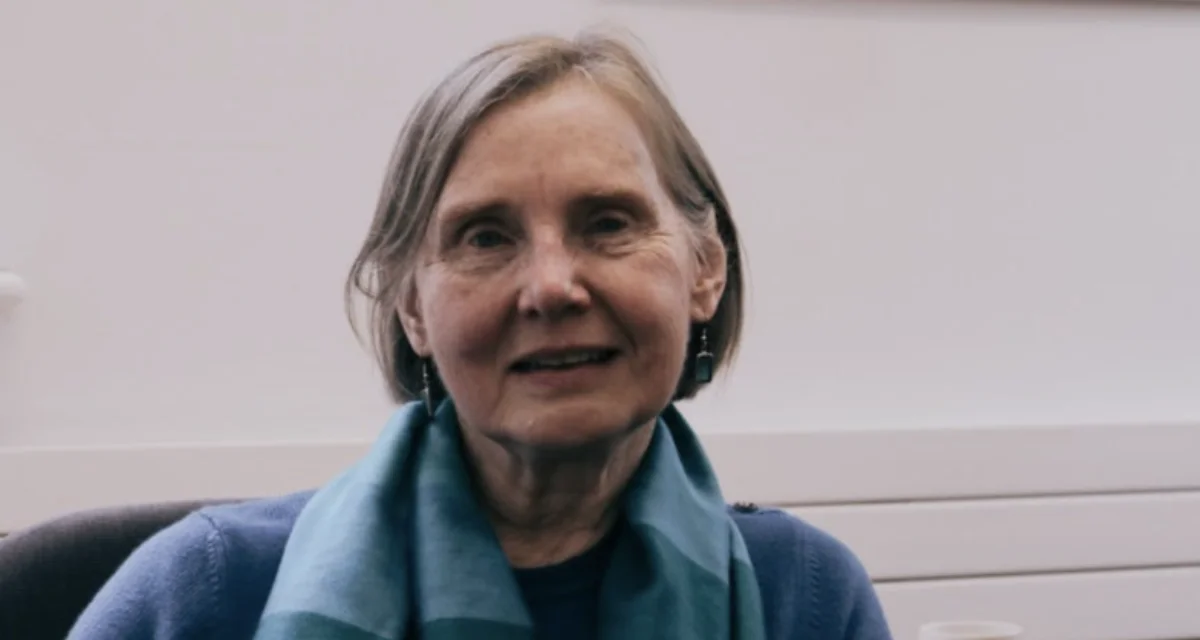

Deborah Burnham, PhD, has been leading a writing workshop for cancer patients at the Abramson Cancer Center for over a decade. The program, called Writing a Life, offers participants a space to reflect on their experiences with illness through guided writing prompts.
Burnham, who is also living with cancer herself, crafts prompts that encourage patients to explore both the physical and emotional marks left by their diagnosis and treatment. During sessions held virtually every three weeks, patients share stories about the visible and invisible effects of cancer. Participation in reading aloud is voluntary.
The Writing a Life program began in 2015 as part of the Patient and Family Services at the Abramson Cancer Center. It was initially held at Penn's Kelly Writers House before moving online. Oncology social workers co-facilitate each session to provide emotional support.
Cathy Kunzinger Urwin, PhD, who joined the group after her own diagnosis of advanced ovarian cancer, described Writing a Life as “therapy, stress relief, and a place to air grievances and heal wounds that cancer treatments cannot cure and frequently cause.” Lisa Wise, M.Ed., another participant who lives with B-cell lymphoma and became a published writer after joining the group, said Burnham creates “a precious space for writing, sharing and healing,” using what she called “magical” prompts that help surface “what is in you that needs to be said.”
Burnham’s approach includes humor alongside serious topics. She has written more than 200 original prompts over 11 years. These are inspired by literature, news events, comedy routines or personal experience.
Lisa Wise noted Burnham’s ability to balance empathy with lightness: “Deb is a very, very unusual combination. She has this gentle quietness that allows her to be in very, very sad, difficult, dark places with people—we’ve lost a lot of people—but then she’s also got this really funny, irreverent side,” Wise said. “She gives permission to everyone to say what’s on their mind.”
Donna Wadsworth Armstrong recalled being too nervous to read her poem aloud during an early meeting but appreciated Burnham’s willingness to step in: “I told Deb I couldn’t read it, and she said she would read what I wrote,” Armstrong said. “I felt so much love.”
Burnham encourages participants to write freely: “And I always say ‘If there is something on your mind and heart that you want to write about ignore the prompt because I’m not checking,’” she said.
In 2021 Burnham was diagnosed with chronic lymphocytic leukemia herself but downplays her illness compared to others’ experiences: “I might have felt a little bit sick. I might have felt I was tired or whatever,” she said. “Sure I lost my hair; big deal—it comes back.” Still she describes feeling supported by fellow group members: “I feel a kind of wordless support from these folks just being there with them... These are my people.”
Despite health challenges Burnham rarely misses sessions—only twice over many years—and remains committed: "I just feel so privileged and so honored to listen to these people," Burnham said. "It's enormously important to me. I love them."



