
Americans largely see the family, especially spouses or partners, as responsible for caring for older adults, according to a recent study from the University of Michigan. The research indicates that biological and stepchildren are next in line regarding caregiving duties, while many also believe that lifelong friends should contribute, albeit to a lesser extent.
The study, published in Alzheimer's & Dementia: Behavior & Socioeconomics of Aging and funded by the National Institute on Aging and the Michigan Center on the Demography of Aging, found that expectations for family involvement increase when an older adult has dementia.
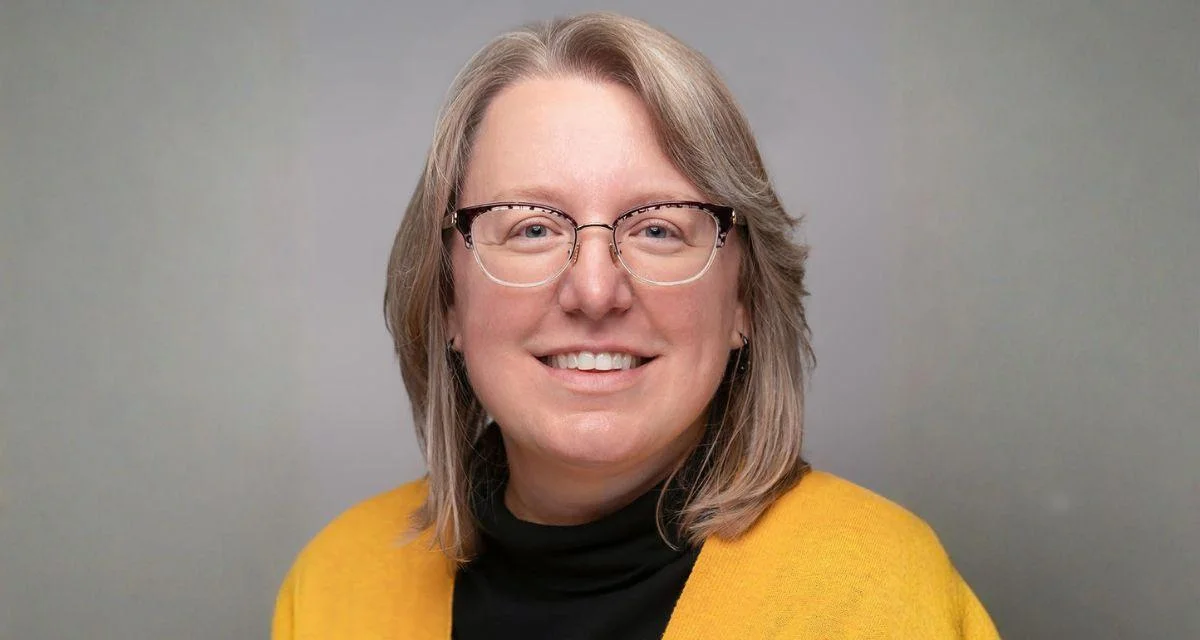
"Our findings show that the public continues to see the family as highly responsible for the care of older adults, but that levels of responsibility vary by relationship type," said Sarah Patterson, demographer and sociologist at the University of Michigan Institute for Social Research. "The expectations for care networks of older adults are much larger when an older adult has dementia compared to when they do not-results mirroring what we find in the literature regarding actual behavior."
Patterson noted changes in family structures—such as fewer children per household—and a rising demand for elder care due to increased longevity. "Given that families are often the frontline caregivers for older adults, we were interested in understanding more about the public opinion about levels of caregiving responsibility for an older adult among a series of potential caregivers," she said. "We also wanted to know whether the older adult having dementia, compared to only physical limitations, like difficulty with lower body movement, would impact beliefs about levels of care responsibility."
The researchers conducted their survey using nearly 2,000 participants from RAND's American Life Panel in October 2024.
"These findings have important implications for how policies and programs are built," Patterson said. "It is important to consider that they reflect the beliefs of people involved in these systems and be aware that more could be done to support caregivers."
Kelsi Caywood, co-author and doctoral student at U-M's sociology department, emphasized inclusivity: "Public programs and health care settings should be inclusive of caregivers without a biological or legal relationship to an older adult." She added: "These policies should make it easier for caregiving to be shared across multiple people rather than assuming care will come only from family members or a single caregiver. Our survey found that people typically attribute caregiving responsibility to several relationships and describe that responsibility in degrees, such as none, some, most, almost all, rather than an all-or-nothing obligation."
With shifting demographics and evolving family structures complicating traditional assumptions around elder care responsibilities in America, questions remain about who is expected—or able—to provide this support.
A related review by Patterson’s team examined 45 studies on expectations within families regarding elder care. The review confirmed high expectations placed on families—especially adult children—to deliver needed assistance.
However, as more U.S. seniors do not have children or experience estrangement from them—a trend identified by Patterson—gaps may emerge if social services continue relying primarily on these familial expectations. "If we continue to rely on a social expectation that adult children will provide care, there will be a set of older adults who experience care gaps," Patterson said. "Many of our social systems are built upon these embedded social expectations. Hospitals and community services...tend to assume that older adults have families to meet their care needs.
"We need to be aware that when social safety nets and public services are designed based on these expectations," she continued,"older adults who are childless, estranged—or whose children are unable to help—will end up without the care they need."
Patterson’s group was surprised by how few U.S.-based studies exist compared with international research into familial obligations around eldercare—a gap they plan further investigation into by expanding their review globally.
"In trying to understand expectations for various family members," she explained,"I felt it was necessary to take a broader view...Mainly who within families and social networks do we expect...Does [responsibility] vary if [the] older adult has different forms of health issues?"
"Because we focused on the U.S....we didn't review research from other countries," Patterson said."Later,we discovered many international studies...especially from China...Our next step is [to] develop better ways [to measure] care expectations—including different relationships,genders,and types of tasks."

