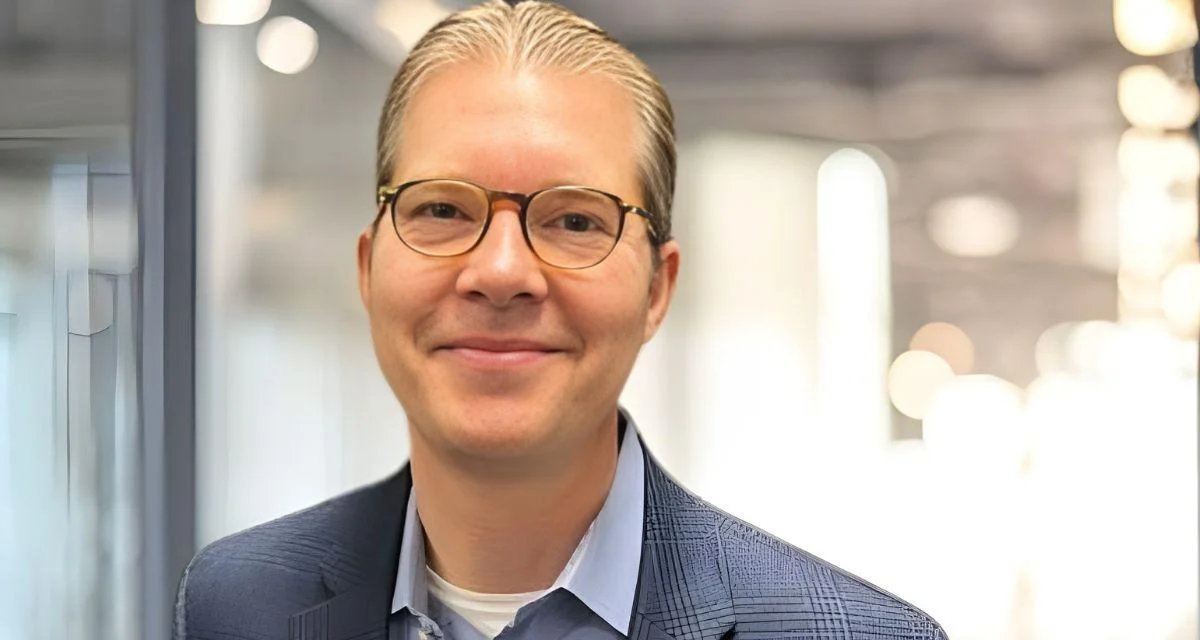

Galapagos, a European biotechnology company, is undergoing significant changes under the leadership of its new CEO, Henry Gosebruch. Appointed last year to replace Paul Stoffels, Gosebruch has been tasked with finding a new direction for the company after years marked by clinical setbacks, regulatory challenges, and organizational restructuring.
Gosebruch brings with him both financial resources—approximately €3 billion ($3.5 billion)—and the support of Galapagos’ board to pursue opportunities in any therapeutic area or technology. Speaking at the J.P. Morgan Healthcare Conference last week, he told BioSpace: “On the one hand, it’s like, well, what’s it going to be? But on the other hand, that’s the beauty of what we have, that we can be much more broad in our thinking and really just look at the best opportunity.”
Initially recruited in April 2025 to lead a proposed spin-out focused on building a new pipeline for Galapagos, Gosebruch ultimately became CEO of the main company after plans for the spin-out were abandoned and Stoffels departed.
One of his first major decisions was to discontinue Galapagos’ investment in cell therapy assets—a strategy heavily favored by his predecessor. Explaining this move, Gosebruch said advancing these technologies would have required an investment of hundreds of millions of dollars and was not competitive. The board announced on January 5 that it would wind down cell therapy operations. Efforts to find partners for programs such as GLPG5101—a Phase II CD19 CAR T treatment for blood cancer—have so far been unsuccessful.
“We’re continuing to be open, but at this point, nobody’s come forward, really, with a proposal that makes sense to pursue,” Gosebruch said.
Reflecting on Stoffels’ tenure and focus on cell therapy programs, Gosebruch stated: “Paul for many, many years and I have a lot of respect, but he was very, very focused on cell therapy. That was sort of his mission... And I think... he was not focused on opening up to other potential opportunities.” He contrasted this approach with his own: “My approach will be that I’m not wedded to one area over another; I’m going to be looking more broadly.”
Currently remaining from Galapagos’ earlier pipeline is GLPG3667—a TYK2 small molecule being tested in Phase II trials for systemic lupus erythematosus and dermatomyositis. However, Gosebruch indicated that even this asset may eventually be partnered out rather than serve as the foundation for rebuilding internal capabilities: “Now we are thinking about... does it make sense for us to rebuild around that asset or does it make sense for us to work with a partner who may already have that?”
At present Gosebruch has not disclosed specific areas where he intends to invest but noted active business development discussions during the conference and ongoing meetings with investors about Galapagos’ future focus. He suggested immunology and inflammation—as well as solid tumors—are likely areas given their alignment with both his background at AbbVie and existing partnerships such as with Gilead Sciences.
“I’d love to find a way to still see that vision through,” he said. “And I think there are some very exciting opportunities in immunology.”
The relationship between Galapagos and Gilead remains strong despite recent changes; five years ago they entered into a multi-billion dollar partnership which has since been restructured as both companies seek new avenues following setbacks in cell therapy.
Gosebruch also highlighted efforts by Galapagos teams exploring opportunities in China—a market increasingly important within global biopharma industry trends—as part of broader business development activities: “I think it’s—I’m going to use the word required—actually,” he said regarding engagement with China.
After layoffs related to restructuring—including those connected with ending cell therapy initiatives—the workforce at Galapagos is expected soon to number only 35-40 people. This smaller size could facilitate mergers or acquisitions without triggering further layoffs among incoming teams.
“One of the things we can offer... is that if there’s a strong R&D team or a strong commercial team... they could... come to Galapagos and be our team going forward,” said Gosebruch. “There won’t be any synergy.”
He emphasized patience moving forward amid investor expectations: “I’d rather take more time, be patient and wait for the right opportunity... than rush into anything.”



