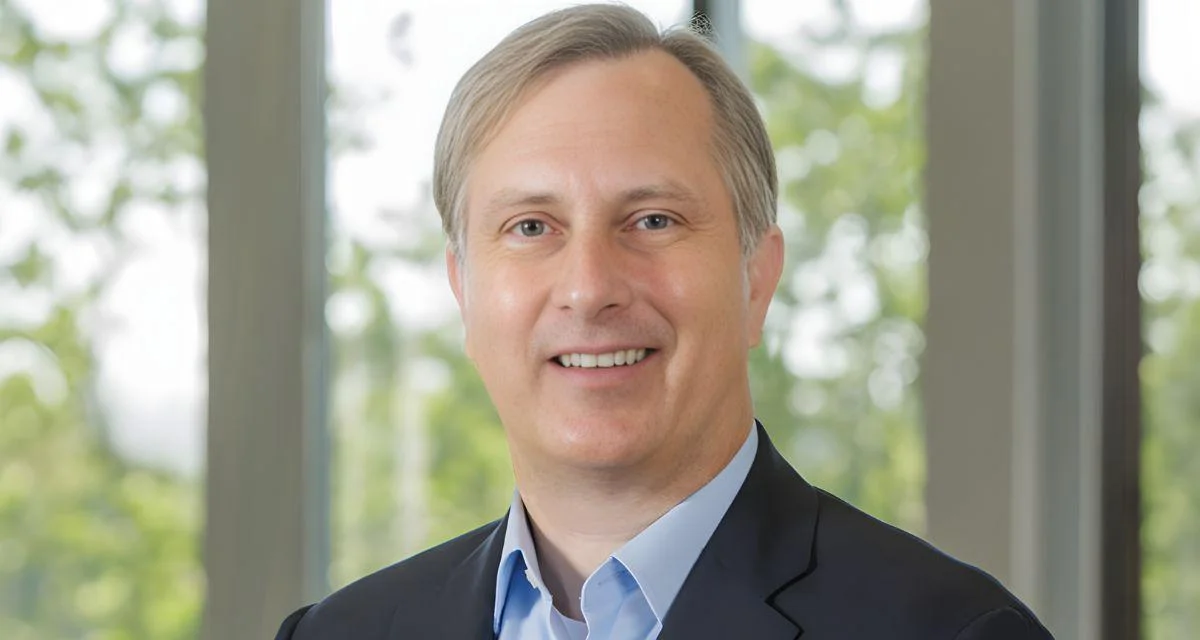

AbbVie emphasized its ambitions in neuroscience and oncology during its presentation at the J.P. Morgan Healthcare Conference. Scott Reents, chief financial officer of AbbVie, stated, “We anticipate being the largest neuroscience player in the industry soon.” He also highlighted the company’s oncology pipeline: “And then the oncology pipeline is something we’re also very excited about that probably isn’t as appreciated as we’d like it to be.”
The company recently announced a licensing agreement with RemeGen for ex-China rights to a PD-1/VEGF bispecific antibody, a deal valued at nearly $5 billion. AbbVie will pay $650 million upfront as part of this agreement. This move positions AbbVie among other major pharmaceutical companies investing heavily in immuno-oncology.
“We feel that can be a very nice complement to our c-MET franchise,” Reents said. The company’s Emrelis, an antibody-drug conjugate targeting c-Met, was approved by the FDA last May for patients with certain types of non-small cell lung cancer.
Roopal Thakkar, executive vice president of research & development and chief scientific officer at AbbVie, commented on the company’s research efforts: “a very strong pipeline internally in a very active research group. . . . So we get assets out of that, a fairly consistent stream.” AbbVie currently lists 18 investigational drugs in clinical development.
Thakkar added regarding external partnerships: “I think you could anticipate from us looking externally for ways to complement the ADC franchise and on the [hematology] side as well.”
In addition to the RemeGen deal, AbbVie recently committed over $1 billion in milestone payments for ex-China rights to a Phase III DLL3xDLL3 T cell engager from Suzhou Zelgen Biopharmaceuticals. This drug could compete with Amgen’s Imdelltra. There were also rumors about potential interest in acquiring Revolution Medicines; however, AbbVie has denied these reports.
AbbVie is recognized for its work across multiple therapeutic areas including oncology, neuroscience, eye care, aesthetics, and especially immunology. The company provided guidance projecting $31 billion in revenue by 2027 from Skyrizi and Rinvoq combined—$20 billion from Skyrizi and $11 billion from Rinvoq—with further details expected when full-year 2025 earnings are released on February 4.
Reents expressed optimism about these products’ future: “The runway is really significant still through the end of the decade and even into the 2030s as we go forward,” he said. “And that’s based on a certain way these immunology markets are structured and the breadth and depth that we have with both of those assets.”

