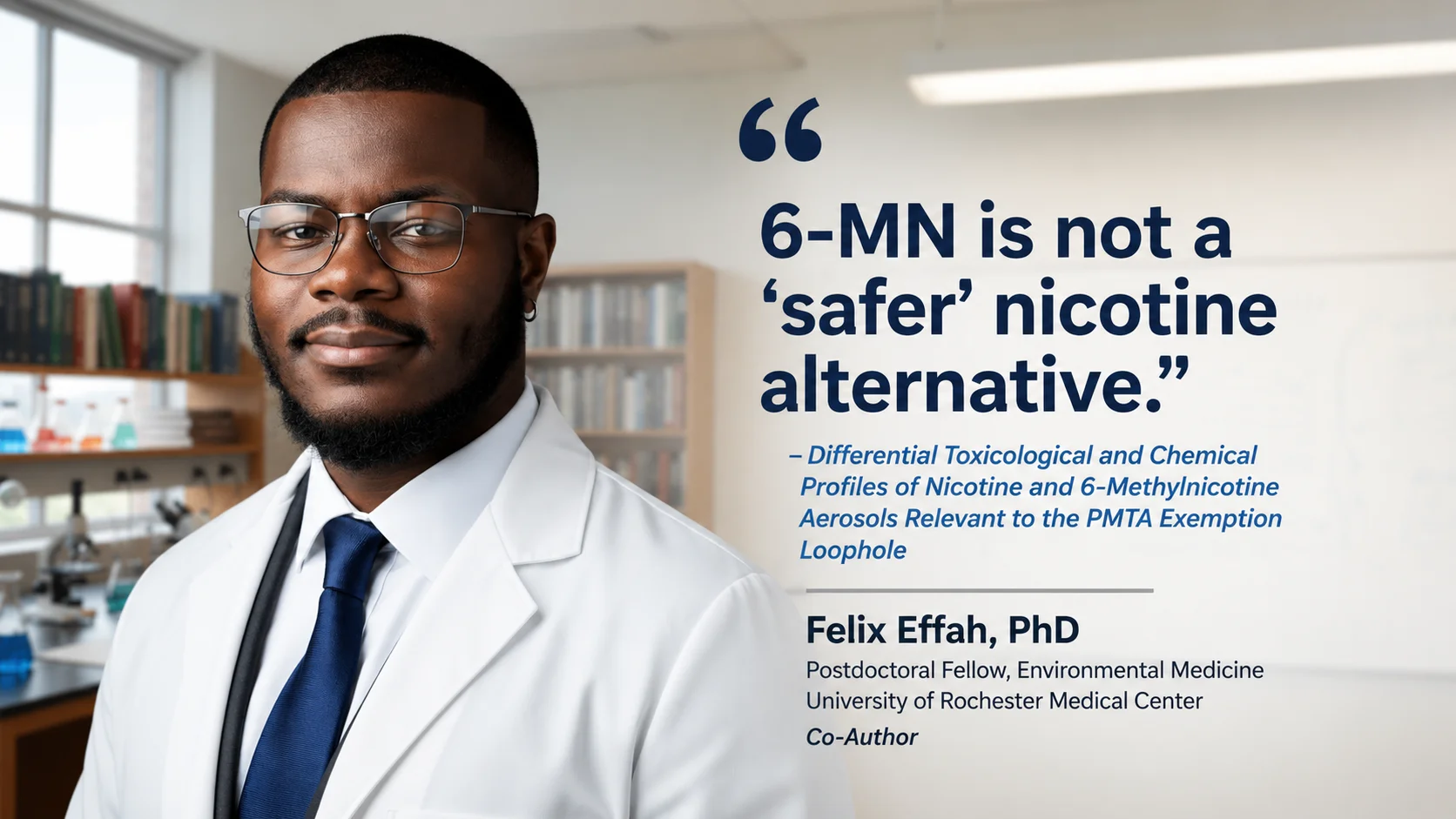

A study published in the journal Toxicology found that 6-methyl nicotine (6-MN), a nicotine analog that has appeared in some electronic cigarette products, triggered biological changes associated with airway inflammation, tissue injury and disruption of the lung’s protective barrier in a laboratory model of human airway tissue.
“Our findings reveal differential toxicological and chemical profiles for nicotine and 6-MN aerosols,” wrote the researchers. “6-MN is not a ‘safer’ nicotine alternative.”
Nicotine analogs are compounds that are chemically similar to nicotine but differ slightly in their molecular structure. Researchers say those differences may alter how the compounds interact with the body, making additional toxicological evaluation important as the substances emerge in some vaping products.
The paper, led by Felix Effah of the University of Rochester Medical Center and senior author Irfan Rahman, included researchers from the University of Rochester Medical Center, Portland State University and the UK Health Security Agency.
The authors compared aerosols containing nicotine with aerosols containing 6-methyl nicotine using a three-dimensional model designed to replicate human airway tissue.
The researchers found that exposure to 6-MN produced distinct patterns of gene activity associated with DNA damage, inflammation and epithelial injury compared with nicotine. The study also found evidence of airway remodeling, increased mucus-producing goblet cells and reduced levels of proteins that help maintain the airway’s protective barrier.
According to the researchers, those findings suggest 6-MN may affect the respiratory system differently than conventional nicotine and warrant additional study. The authors concluded that 6-methyl nicotine should not be considered a “safer” alternative to nicotine and called for further toxicological research as nicotine analogs become more prevalent in electronic cigarette products.
The findings come amid increased scrutiny of nicotine analogs and broader enforcement efforts targeting unauthorized vaping products entering the United States.
Former Bureau of Alcohol, Tobacco, Firearms and Explosives Deputy Director Edgar Domenech last week said some manufacturers are exploiting regulatory uncertainty by changing the contents of products while leaving their branding, packaging and flavors largely unchanged.
“These Chinese organized crime groups, what they realized is if they go ahead and just change the ingredients in the packaging, then they create confusion and there is no enforcement or regulatory agency that then is responsible to address these illicit, illegal, disposable vapes,” Domenech told Fox News.
Domenech argued the strategy allows companies to continue marketing flavored disposable vaping products while creating uncertainty over which agencies have authority to regulate or seize them.
“They’re putting these products side by side in these big shops, because the packaging is all the same,” he said. “All they’ve done is changed one of the ingredients in the product.”
Separately, a recent peer-reviewed review article published in March in Chemical Research in Toxicology said that nicotine analogs are being marketed as products described as “PMTA-exempt” or “tobacco-free,” while warning that independent research on their long-term health effects remains limited.
Domenech said the regulatory uncertainty makes it more difficult for law enforcement and policymakers to respond quickly as new products enter the market.
“We need to educate our policymakers at the federal level but also at the state and local levels because we need boots on the ground to understand what they can do legally in seizing these products,” he said.

