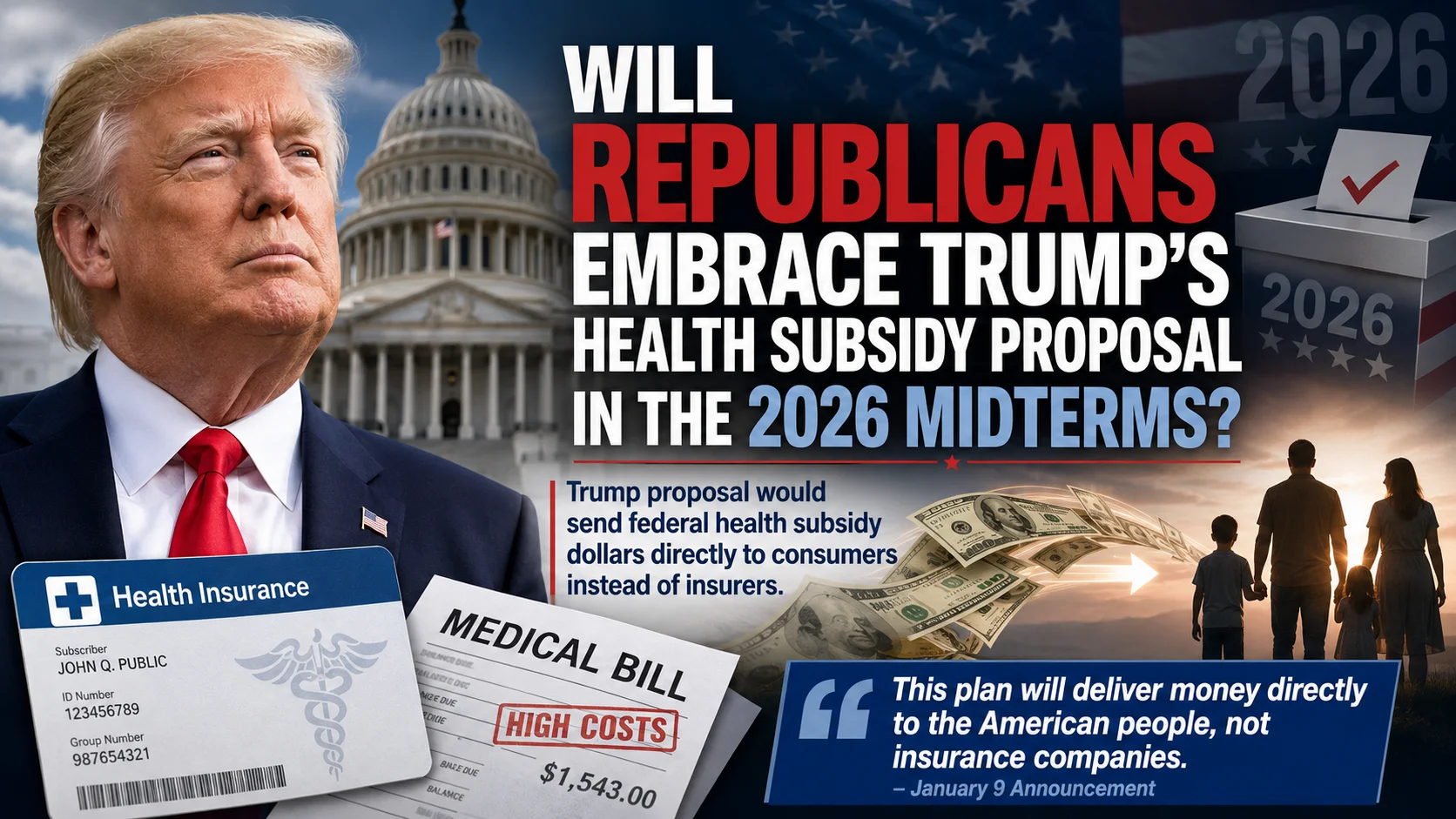

As Republicans prepare for the 2026 midterms, they face a decision on whether to embrace President Donald Trump's proposal to send federal health subsidy dollars directly to consumers. The debate comes as health care costs rank among voters' top concerns, according to recent Kaiser Family Foundation (KFF) polling.
The White House says the plan would stop sending billions of dollars in subsidy payments to insurers and instead provide that money directly to eligible Americans, allowing them to purchase health coverage of their choice.
The proposal is a central feature of Trump's "Great Health Care Plan.”
"This plan will deliver money directly to the American people, not insurance companies," said the January 9 announcement.
A KFF survey released last month found that healthcare affordability remains a significant concern for voters, with roughly two-thirds of Americans reporting worries about affording healthcare costs, including insurance premiums, deductibles and unexpected medical bills. Healthcare costs ranked among the leading financial concerns cited by respondents.
Central to this debate is the Affordable Care Act (ACA), also known as “Obamacare.” Enhanced ACA premium subsidies were enacted during the COVID-19 pandemic, according to KFF. The subsidies remained in place through 2025 but expired at the end of last year, leaving Congress to decide whether to restore them.
Congress has not yet acted on legislation to renew the enhanced subsidies.
A separate KFF poll last October found that 78% of adults, including a majority of Republicans, support extending the ACA subsidies.
A December 2025 poll by GrayHouse, however, found that support for extending the ACA subsidies fell to 34% after respondents were presented with additional information about the program's cost and eligibility rules.
Under current law, most ACA premium subsidies are paid directly to health insurance companies rather than patients. GrayHouse found that 29% of voters identified health insurance companies as the entity most responsible for rising healthcare costs, more than pharmaceutical companies, hospitals or the Affordable Care Act itself.
A national survey released in May by the Insurance Watchdog Coalition found that 90% of respondents said health insurance companies have too much influence over the healthcare system, while 78% held an unfavorable view of these companies.
Reports of fraud in the program also have become part of the debate. Earlier this week, the Paragon Health Institute released research estimating that approximately 6.2 million Affordable Care Act exchange enrollments in 2026 may be improper, representing roughly 27% of all ACA exchange sign-ups. The report estimates taxpayers could spend up to $25 billion this year on improper subsidy payments.
Dr. Mehmet Oz, the administrator of the Centers for Medicare and Medicaid Services, which oversees the ACA, said at a press briefing this week that the agency “believes perhaps one-third of ACA enrollment is improper,” reported the Washington Post.
“If you care about the ACA, then you’ll want us to take the fraud out,” said Oz.
Supporters of Trump's proposal argue that giving subsidy dollars directly to consumers could reduce opportunities for fraud while making healthcare costs more transparent.
In congressional testimony last year, Joel White, president of the Council for Affordable Health Coverage, cited “widespread reports of enrollment fraud” in the ACA and said “subsidies should flow directly to consumers, not insurers.”

