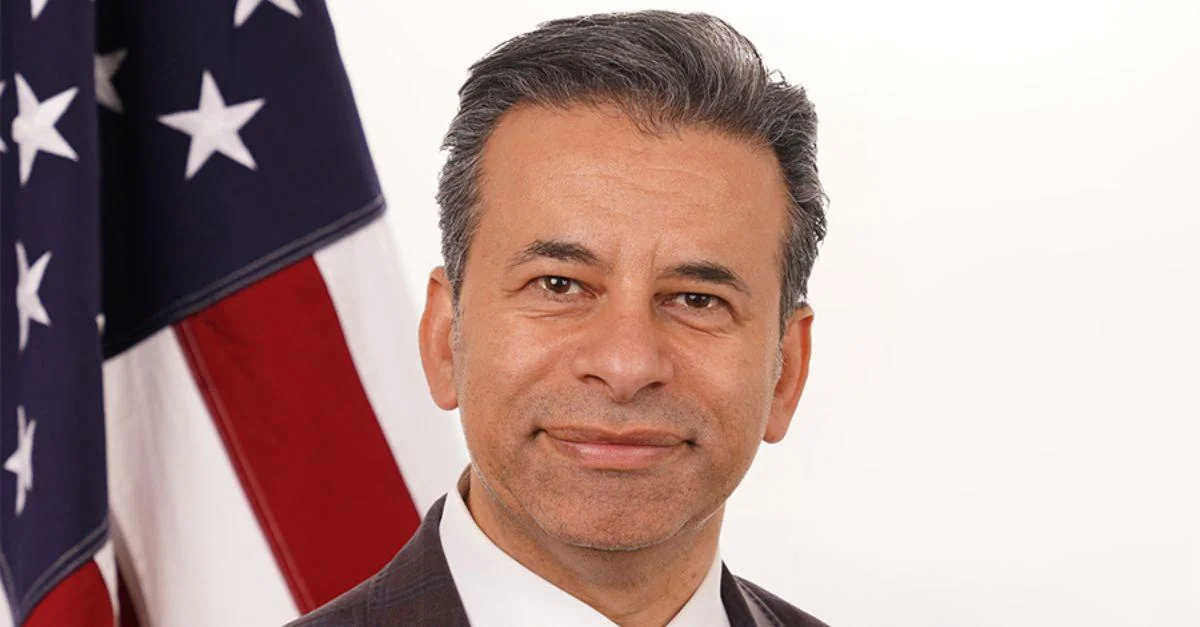

A senior Food and Drug Administration (FDA) official, later identified as outgoing biologics chief Vinay Prasad, spoke to the press last Thursday about uniQure’s investigational Huntington’s disease treatment while requesting anonymity. Prasad's upcoming departure from the agency was not known at the time of the briefing, though officials later said he had always planned to leave after a year.
The incident has raised concerns about transparency within the FDA and other Department of Health and Human Services (HHS) agencies. The administration under Robert F. Kennedy Jr. has promoted efforts toward “radical transparency,” but recent events suggest ongoing secrecy in key decision-making processes.
During the media briefing, Prasad described himself as “a professor” and “practicing [hematology-oncology] doctor,” according to STAT News. He also told reporters that he missed his clinic, teaching duties, podcasting, and “speaking freely.” When news broke that he would depart the FDA at the end of April for a second time, it came as little surprise to some observers.
Questions remain about why Prasad requested anonymity if he already knew he was leaving his post as director of the Center for Biologics Evaluation & Research (CBER). The episode highlights what some see as a lack of openness regarding leadership changes and policy shifts at the agency.
Prasad reportedly accused uniQure of presenting “distorted” and “manipulated” clinical data for its gene therapy candidate AMT-130 during an event described by H.C. Wainwright as “extraordinary.” This criticism came despite previous FDA statements that it generally cannot provide confidential information about unapproved products. FDA Commissioner Marty Makary also appeared to disparage AMT-130 in a recent interview with CNBC without naming it directly.
There is confusion over trial requirements for AMT-130, particularly regarding whether a sham surgery–controlled Phase 3 trial is necessary before approval can be considered. UniQure has said this represents a shift from earlier guidance received from the FDA in 2024. Disagreement remains over what such a control procedure would entail.
Broader issues with transparency have been noted across HHS agencies. For example, Rep. Jake Auchincloss recently called the Commissioner’s National Priority Voucher program "shrouded in secrecy," citing unanswered congressional inquiries reported by the Associated Press. Harpreet Singh, chief medical officer at Precision for Medicine and former FDA division director, said: "I feel that in the macro picture of things, what bolsters innovation is regulatory certainty...and we very much are lacking that right now." Debra Houry, former CDC chief medical officer, told Congress: "Trust and transparency have been broken" following policy changes announced without explanation to CDC leadership.
The situation surrounding uniQure’s gene therapy has brought renewed attention to calls for greater clarity within federal health agencies amid ongoing policy changes and leadership turnover.



