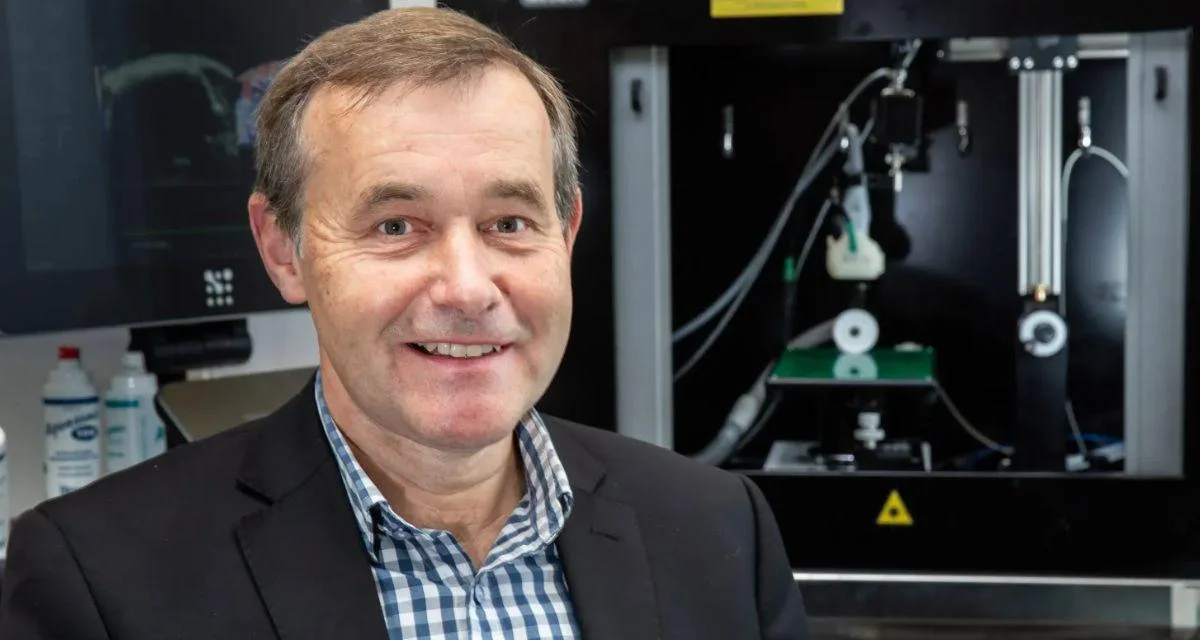

Scientists at the University of Auckland have identified a specific brain region that may play a role in high blood pressure. The research focuses on the lateral parafacial region, located in the brainstem, which is responsible for automatic bodily functions such as digestion, breathing, and heart rate.
Lead researcher Professor Julian Paton, director of Manaaki Manawa, Centre for Heart Research at Waipapa Taumata Rau, University of Auckland, explained the function of this area: "The lateral parafacial region is recruited into action causing us to exhale during a laugh, exercise or coughing. These exhalations are what we call 'forced' and driven by our powerful abdominal muscles. In contrast, a normal exhalation does not need these muscles to contract, it happens because the lungs are elastic."
The team discovered that the lateral parafacial region also connects to nerves that constrict blood vessels and increase blood pressure. According to Paton: "We've unearthed a new region of the brain that is causing high blood pressure. Yes, the brain is to blame for hypertension! We discovered that, in conditions of high blood pressure, the lateral parafacial region is activated and, when our team inactivated this region, blood pressure fell to normal levels."
This suggests that changes in breathing patterns involving strong abdominal muscle contractions could trigger high blood pressure. The findings indicate that identifying abdominal breathing in patients with hypertension might help guide treatment options.
Their study has been published in Circulation Research.
Researchers then investigated whether medication could target this specific part of the brainstem. Paton noted: "Targeting the brain with drugs is tricky because they act on the entire brain and not a selected region such as the parafacial nucleus."
A significant breakthrough came when researchers found out that signals from outside the brain—specifically from carotid bodies near the carotid artery—activate this area. The carotid bodies sense oxygen levels in blood and can be targeted safely with medication.
"Our goal is to target the carotid bodies, and we are importing a new drug that is being repurposed by us to quench carotid body activity and inactivate 'remotely' the lateral parafacial region safely, i.e., without needing to use a drug that penetrates the brain," said Paton.
This discovery may open up new treatment possibilities for people with high blood pressure and sleep apnoea since carotid bodies are known to activate during episodes where patients stop breathing at night.

