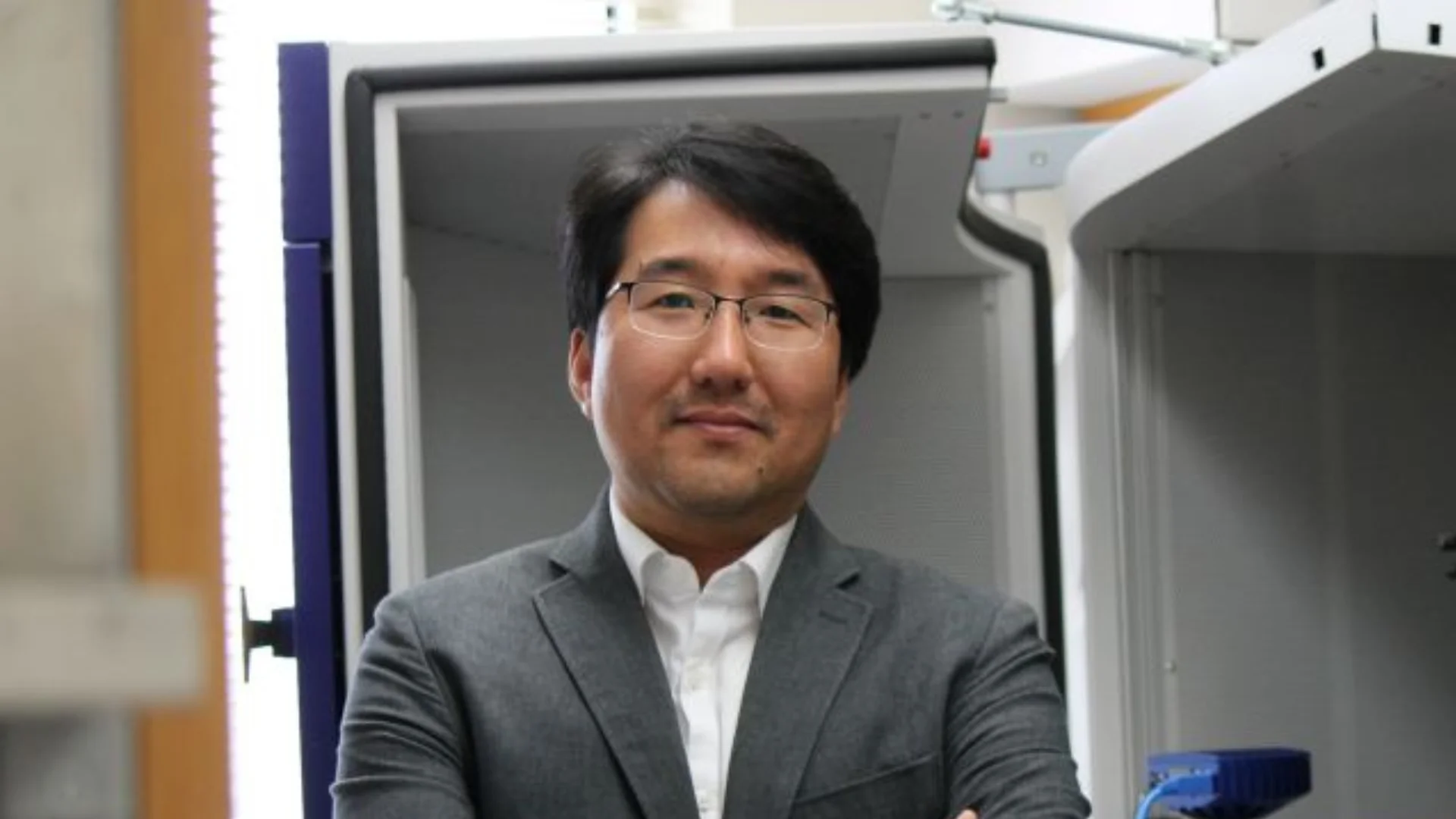

A research team from KAIST has developed a new culture technology that enables the stable growth of intestinal stem cells (ISCs) without using animal-derived components. This approach addresses safety and regulatory concerns that have limited the clinical application of ISCs, which are considered promising for treating difficult intestinal diseases due to their low risk of rejection.
The joint research team was led by Professor Sung Gap Im from KAIST’s Department of Chemical and Biomolecular Engineering, Dr. Tae Geol Lee from the Korea Research Institute of Standards and Science, and Dr. Mi-Young Son from the Korea Research Institute of Bioscience and Biotechnology. They created a polymer-based culture platform called "PLUS" (Polymer-coated Ultra-stable Surface), which supports ISC growth in an environment free from xenogeneic, or animal-derived, materials.
PLUS is made by coating a synthetic polymer onto surfaces using vapor deposition. The process allows precise control over surface energy and chemical composition, which improves how well ISCs adhere to the surface and enhances mass-culture efficiency. The platform can be stored at room temperature for up to three years without losing its effectiveness, making it suitable for industrial use.
Proteomics analysis showed that ISCs grown on PLUS had increased expression of proteins related to cytoskeletal reorganization. This change leads to a more stable internal cell structure and provides greater mobility for the stem cells. Real-time imaging revealed that ISCs cultured on PLUS migrated about twice as fast as those grown on conventional surfaces.
In experiments with damaged tissue models, ISCs grown on PLUS repaired more than half of the damage within one week, demonstrating strong regenerative capabilities. According to the researchers, "PLUS activates the cytoskeletal activity of stem cells, thereby boosting their practical tissue regeneration capabilities."
The study's first authors were Dr. Seonghyeon Park (KAIST), Sang Yu Sun (KAIST), and Dr. Jin Gyeong Son (KRISS). The findings were published online in Advanced Materials on November 26th.
The project received support from several organizations including the Ministry of Science and ICT, Ministry of SMEs and Startups, National Research Foundation of Korea, National Council of Science and Technology Research, KRISS, KRIBB, and the National NanoFab Center.

