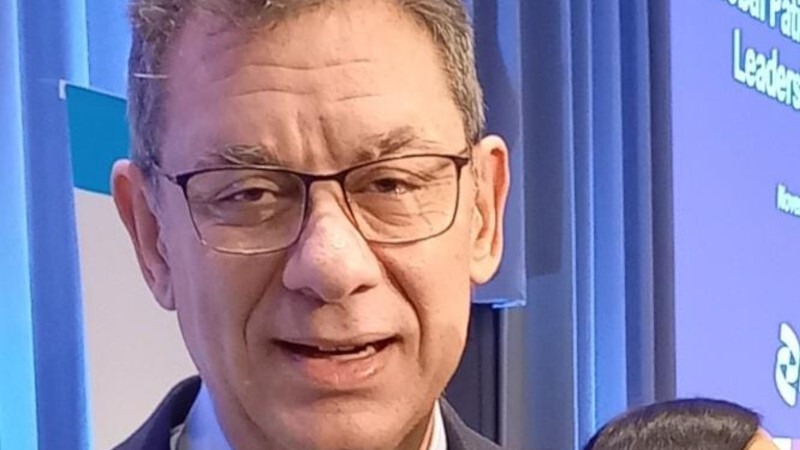

Pfizer CEO Albert Bourla has criticized recent policy changes from the U.S. Department of Health and Human Services (HHS), arguing that they are eroding public trust in vaccines. Speaking to investors, Bourla said, “I can assure you we are not going back to Louis Pasteur times.” He described comments from HHS Secretary Robert F. Kennedy Jr. and other agency officials as “an anomaly” and expressed hope that the situation would be corrected soon.
Bourla also addressed claims made by FDA regulator Vinay Prasad, who attributed 10 child deaths to COVID-19 vaccines without evidence. Last week, rumors suggested the FDA might add a black box warning to these vaccines, but the agency denied those reports.
“I think those comments, they don’t have merit, and that will not change the way that we are looking at our long-term investments on vaccines. We will continue investing on vaccines,” Bourla said. He added: “As I said, this an anomaly that will correct itself. I hope pretty soon.”
The remarks come as Pfizer reported a decline in its COVID-19 business following the pandemic years. The company expects revenue for 2026 to reach up to $62.5 billion, which is below analyst expectations.
Other major vaccine producers such as Merck, GSK, and Sanofi have also seen declines in their vaccine programs after restricted approvals and changes to CDC immunization schedules. These industry-wide challenges have contributed to reduced revenues across several companies.
On Tuesday morning, Pfizer’s shares dropped about 4.8% to $25.17 from $26.43 at Monday’s close.
Despite these setbacks, Bourla remained optimistic about Pfizer’s future growth prospects: “This recent anti-vaccine push is mostly driven politically,” he said, “and when [the] political situation allows that I think [it] will be resolved.”
Analysts described Pfizer’s 2026 guidance as conservative; BMO Capital Markets noted it was about a 1% miss compared with consensus estimates of $61 billion to $61.6 billion in revenue for 2026, while Leerink Partners estimated a shortfall of around 5%.
Pfizer projects its COVID-19 franchise will decrease by 23% year over year to approximately $5 billion in 2026—down from an expected $6.5 billion in 2025. Chief Financial Officer Dave Denton noted continued volatility for Paxlovid sales and seasonal fluctuations for Comirnaty.
Looking ahead, Bourla emphasized recent acquisitions—including obesity treatment manufacturer Metsera—and ongoing research and development as key drivers for growth into 2029 and 2030 despite anticipated patent losses.
According to Denton, Pfizer faces about $1.5 billion in loss of exclusivities (LOEs) on key products next year—a figure expected to double in both 2027 and again in 2028.
“Once ’28 is behind us, the vast majority of those LOEs are done, and the growth drivers that we invest in over the next several years will be maintained, that should allow us to begin to accelerate the top line,” Denton said.
Bourla stated that actions taken over the past year—including acquiring Metsera—have helped reduce Pfizer’s exposure to HHS policies under Kennedy’s leadership.
He also highlighted opposition from American medical organizations representing pediatricians, obstetricians, cardiologists and pneumologists among others; according to Bourla, even the World Health Organization has rejected some recent U.S. vaccine policies.
“They are extremely, extremely upset, and they keep issuing statements that they are contradicting recommendations that are happening from CDC,” Bourla said. “Let’s not forget that CDC used to be the most reliable and credible organization in the world that everybody was looking up at.” He concluded by noting this reputation has now been damaged.
Bourla warned that while current impacts have focused on COVID-related products, further effects could spread throughout other areas of Pfizer’s business: “What is worrisome is that science is replaced with political beliefs,” he said.



